Health and Safety Policy — Commercial Waste Removal Mill Hill
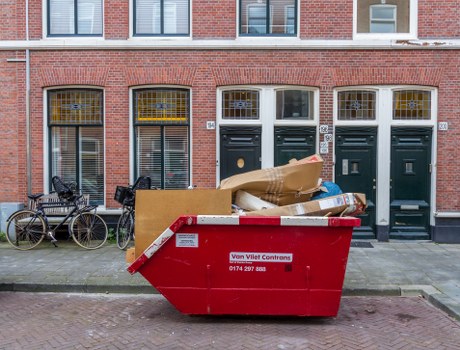 Purpose and scope: This Health and Safety policy sets out the company's commitment to maintaining safe operations for commercial waste removal and rubbish collection across our service area. It applies to all staff, contractors and visitors involved in commercial waste removal Mill Hill and nearby locations where our teams operate. The policy outlines responsibilities, core safety controls and the standards we apply to every waste collection, transfer and disposal activity to prevent harm, protect the environment and comply with best practice. All personnel must read and understand this policy and the procedures that support it.
Policy statement
We are committed to providing a safe working environment and to reducing risks associated with commercial rubbish removal and waste management operations. Our objectives are to prevent work-related injury and ill health, minimise environmental impact from waste operations, and ensure services such as commercial waste clearance and rubbish removal Mill Hill are delivered with robust safety control. This policy is a statement of intent and a framework for action; it will be communicated, implemented and reviewed regularly.
Responsibilities
Senior management holds ultimate responsibility for health and safety strategy and resource allocation. Managers and supervisors are responsible for implementing safe working systems for waste removal services and ensuring staff are trained and competent. Employees, drivers and operatives are expected to follow procedures, use PPE and report hazards. Contractors and sub-contractors must comply with our safety requirements when performing commercial waste services on our behalf. Clear accountability ensures that incidents are avoided and that, if they occur, lessons are learned promptly.Risk assessment and control measures: We carry out regular risk assessments for all activities related to rubbish removal and commercial waste collection. These assessments identify hazards such as manual handling, traffic and vehicle movements, hazardous materials, sharps and slips, trips and falls. Controls include safe loading procedures, mechanical aids for heavy loads, clear segregation of hazardous streams, robust containment and secure fastening of waste loads. Risk control is a continuous process and assessments are reviewed whenever there is a change to operations or following an incident.
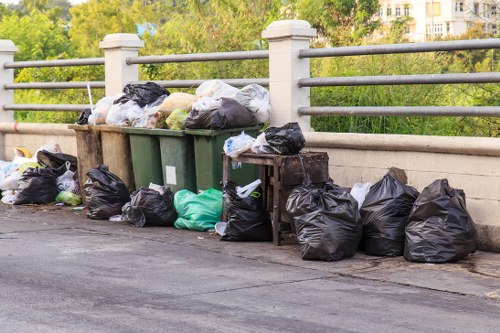 Training and competence: All staff engaged in commercial waste removal must receive induction and job-specific training covering safe operating procedures, manual handling, use of lifting equipment, hazardous waste handling, fire safety and emergency response. Drivers receive additional training on vehicle safety, load securing and defensive driving. Training records are maintained and training is refreshed at planned intervals. We also provide toolbox talks and refresher briefings to ensure safe practice in rubbish removal Mill Hill and throughout our service area.
Personal protective equipment (PPE) and welfare: Appropriate PPE such as high-visibility clothing, gloves, safety footwear, eye protection and respiratory protection (where needed) is provided and must be worn at all times on operational sites. Welfare facilities, including handwashing and rest areas, are made available where teams operate for extended periods. Supervisors are responsible for ensuring PPE is in good condition and that staff understand proper use and limitations. The correct PPE significantly reduces exposure to common hazards in waste removal.
Vehicle and plant safety: Vehicles and plant used for commercial rubbish collection are subject to regular maintenance and inspection regimes. Pre-shift checks are mandated for all drivers and operators. Safe loading practices, secure tie-downs and correct use of tail lifts and compaction equipment are strictly enforced. Operational speed limits and exclusion zones around loading activities reduce the risk of collisions. Mechanical aids and training on equipment use form an integral part of our safety controls for waste removal services.
Hazardous and special waste handling: Our procedures distinguish general commercial waste from hazardous streams such as asbestos-contaminated materials, chemical wastes, medical or pharmaceutical waste and other controlled substances. Special handling, labelling and segregation protocols are in place, and only authorised personnel handle these materials. Emergency procedures for spills, leaks or contamination events are well defined, with spill kits, containment equipment and clear communication channels to manage risks effectively.
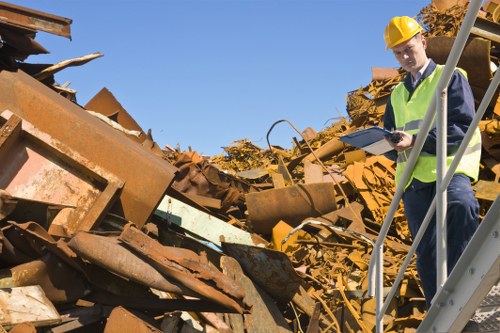 Incident reporting and investigation: All accidents, near misses and hazardous exposures are reported immediately, investigated and recorded. Investigations seek root causes and identify corrective actions to prevent recurrence. Records are maintained to support continuous improvement. Learning from incidents is shared with staff through briefings and updates to procedures. This proactive approach ensures that commercial waste removal operations evolve to reduce risk and raise safety standards.
 Monitoring, review and continual improvement: We monitor health and safety performance through audits, inspections and review of incident trends. Key performance indicators include training completion rates, inspection findings, incident frequency and the results of vehicle and equipment checks. Senior management reviews policy performance at regular intervals and updates the policy when required. Stakeholder feedback from front-line teams informs changes to working practices. Continuous improvement is central to the way we manage safety in commercial waste removal and rubbish collection activities.
Communication and consultation: We consult with employees and safety representatives on matters affecting workplace health and safety. Safety information and procedural updates are made available via briefings, noticeboards and electronic communications. Employees are encouraged to report hazards and suggest improvements. Regular safety meetings review operations, share learning and reinforce expectations for safe behaviour during waste collection rounds and site works.
Compliance, legal responsibilities and policy review: While this policy is not a substitute for statutory guidance, we commit to meeting applicable legal obligations and recognised industry standards in commercial waste management. The policy will be reviewed at least annually or sooner following significant change, incident or legislative update. It is the responsibility of all staff to uphold the standards within this policy and to contribute to a safe, effective and responsible waste removal service.
